
Blogs
RADA Buddy scheme with Skye Hallam
We caught up with BA (Hons) acting graduate Skye Hallam about her experience of RADA's Buddy scheme.

Props placement at The Park Theatre
I’m Aino, a second year technical theatre student, specialising in props and stage management. This term I’ve been on placement as a props supervisor at the Park theatre for After Miss Julie directed by Dadiow Lin.

From the Director: about The Hamlet Project
A week of preview performances to pilot a new RADA Residencies programme. This new Academy initiative launches with a polyphonic production of Hamlet directed by Sinéad Rushe (RADA Lead Acting Tutor), the first of RADA’s artist-in-residence projects that aims to bring fresh professional insight to students and audiences alike.
Trish Wadley Productions, the producer of the acclaimed sell-out productions of Othello at Riverside Studios and The Shape of Things at Park Theatre, presents this innovative new production of The Hamlet Project featuring Hamlet performed by an ensemble of three actors and live music composed by Michael Fox.
Performances 8-13 December at RADA.

Graduate interview: Benjamin Akintuyosi, BA Acting 2025
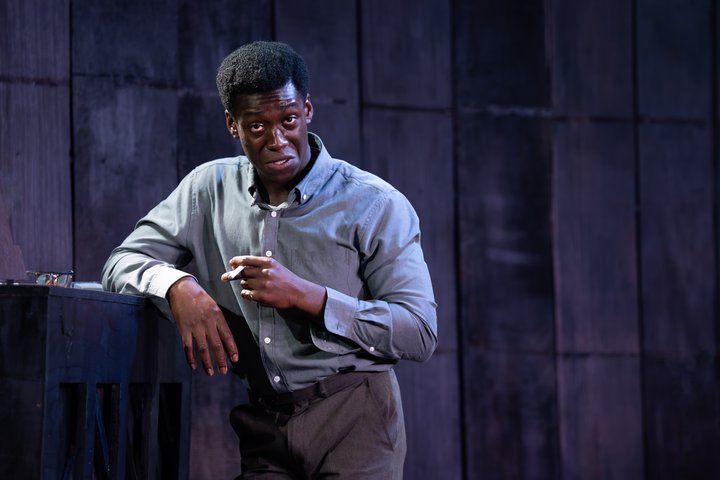
Benjamin Akintuyosi’s first professional role after graduating from our BA (Hons) in Acting 2025 was playing legendary jazz trumpeter Miles Davis in new play Miles at the Edinburgh Fringe Festival this summer.
An introduction to RADA's Wellbeing Service
Pursuing an acting or technical theatre career can be mentally and emotionally demanding. During this training, it's vital that students prioritise psychological wellbeing as they hone their craft.
RADA's expanded Wellbeing Service, comprising of both counselling and disability services, can support students to thrive.

Youth Company: Choosing our summer production
Our Youth Company students decide which play to perform in a collaborative and transparent process, exploring different options and creating a shortlist together. Take a look at how they chose this year’s production. Read on here.

"We have a responsibility to the reality of the situation": the power of Wild Cherries
This Spring, we are presenting the UK premiere of Wild Cherries featuring the work of our talented acting and technical theatre arts students.
We sat down with Director of Wild Cherries, Kristine Landon-Smith to learn more about the production, her work at RADA and how the play’s themes remain relevant to today’s audiences. Read the blog here.
Spotlight on: Part-Time Blended Acting Foundation
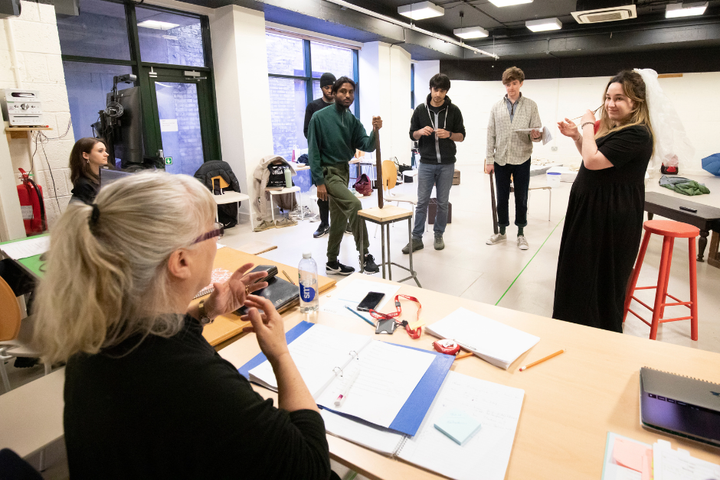
We caught up with Course Director Michelle Chadwick to learn more about our brand new Part-Time Blended Foundation Course in Acting. Starting in February, the course gives a solid grounding in RADA actor training over 6 months through a blend of online and in-person learning. Michelle chatted to us about the skills students will learn, how blended learning works and what most excites her about this new course. Read the blog here.
Spotlight on: Meisner
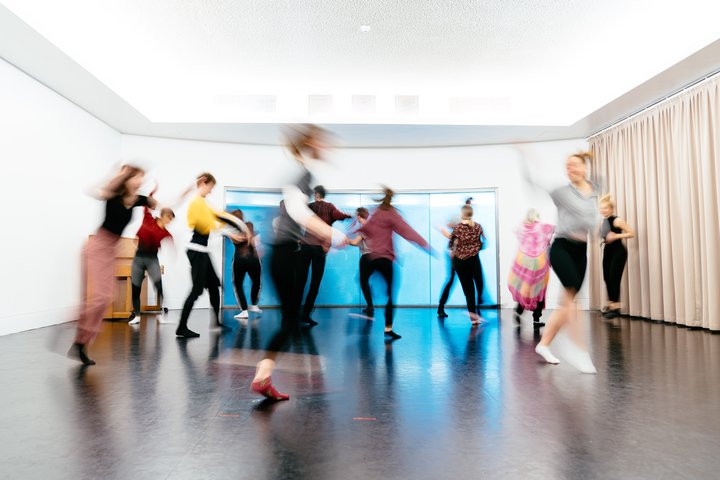
Our brand new short course in Meisner technique introduces students to a unique training form that teaches actors to respond to stimuli and develop observation and active listening.
We caught up with course director Ian Henderson to learn more about Sanford Meisner, the six-week course and what Meisner technique can do for actors. Read the blog here.
Flat 11B – How we created RADA’s latest ‘escape room’ project by Spiky Saul
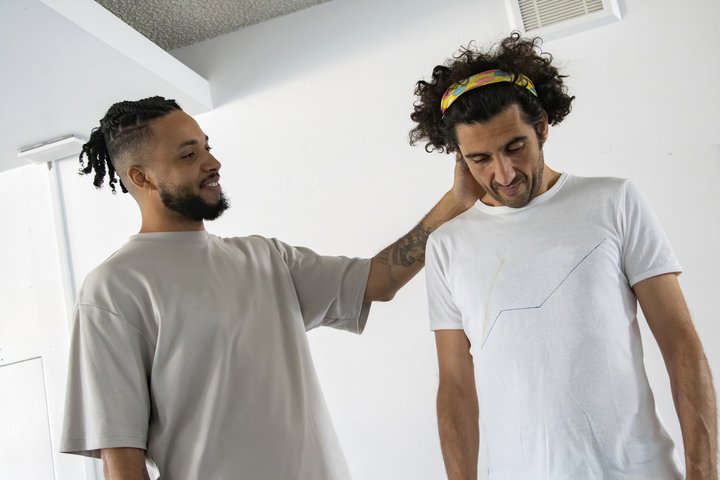
This spring, our Technical Theatre and Stage Management students created an escape room called Flat 11B. The experience is set in the aftermath of an explosion at a laboratory, where some essential vials have gone missing, along with the mysterious Dr Reid. Participants must work together as a team to break into Dr Reid's flat, solve the mystery and recover the vials.
We caught up with the concept writer, director and designer of Flat 11B, second-year FdA in Technical Theatre & Stage Management student Spiky Saul, to find out about her experience of working on this project. Read the blog here.

2021 Highlights: A Message from the Director of Short Courses
As 2021 draws to a close, Geoff Bullen, Director of RADA's Short Courses, looks back at the year we've had and the highlights of our short course programme, and gives the lowdown on what we're excited about in 2022. Read the blog here.

Tutor Interview: Introduction to RADA One-day Workshops
An Introduction to RADA: One-day Workshops are brand-new self-contained workshop days taught face to face at RADA, which focus on a two specific aspects of our actor training: Voice and Movement; Text and Acting; Improvisation and Devising; and Dance and Singing.
We caught up with Geoff Bullen, Director of Short Courses, to learn more about the workshops and what they can offer you, regardless of your acting experience. Read the blog here.

Tutor Interview: Singing Academy for Actors
Singing Academy for Actors: Online offers a bespoke and intensive look at singing from an actor’s perspective. Students work with songs of their choice, learning techniques and strategies to improve their singing from both a musical and dramatic point of view.
We caught up with course director Jane Streeton to learn more about the course content and how singing can enhance an actor's technique. Read the blog here.

Tutor Interview: Women of the Stage
From Ancient Greece to the age of Shakespeare, women were forbidden to tread the boards. Our brand-new short course, Women of the Stage, is a five-day journey into the history of women's status in theatre and society in the UK and the characters they performed, from Shakespeare and Restoration Drama through to contemporary plays.
We caught up with course director Ingrid Schiller to learn more about the fascinating course content and why it matters to actors today. Read the blog here.

Tutor Interview: Greek Tragedy
Our brand-new two-week course Greek Tragedy takes you into the ruthless and vengeful world of Greek theatre, exploring the work of its three major tragedians through their telling of the same story – that of Electra and Orestes.
We caught up with RADA Associate Director Nona Shepphard, to find out more. Read the blog here.

Tutor Interview: Line Learning with Confidence
For many actors, learning lines is the least enjoyable part of their career – often leading to self-sabotaging that can undermine your confidence and become a major career obstacle. Our brand-new dedicated short course, Line Learning with Confidence, is the answer to unlocking this issue through tried and tested RADA training and techniques.
We caught up with course director Brigid Panet to find out more. Read the blog here.

RADA: Mind and Body - a unique new series of short courses
Looking to try something different this summer?
RADA: Mind and Body is a new series of online acting short courses, created to explore the connection between acting and living.
Learn more about the RADA: Mind and Body short course series.

Endless possibilities: hear from our online short course students
In 2020, RADA's short courses moved online. From reimagined versions of popular workshops including Elements of RADA to specially created programmes such as Fundamentals of Acting, the launch of our online courses meant that students from across the world could experience RADA's unique training for the first time – without needing to leave their homes.
We caught up with some of our online short course students to hear about their experiences. Read their thoughts here.

Take the first step on your acting journey
Fundamentals of Acting: Online takes students who are ready to seriously commit to the business of becoming an actor, providing a taste of the more in-depth RADA training that characterises our Foundation Course in Acting and the full BA (Hons) in Acting course.
We caught up with course director Joan Oliver to find out more about the course. Read the blog here.
Écoute Theatre: Shining the spotlight on carers
Écoute Theatre, co-founded by RADA graduate and artistic director Zoe Templeman-Young, have transformed their play Take Care into a filmed documentary series telling the stories of carers across the UK, featuring many RADA graduates.

Reflections on the RADA Youth Company 2019-20
As applications open for our first fully digital Youth Company, we caught up with the members of last year’s company about their experiences of the course, what it was like to move from in-person training to working on Zoom, and how they created their digital production Poor Connection.

RADA Business: A dancer's perspective on preparing for performance
With the recent return of BBC One's Strictly Come Dancing to TV screens, we caught up with RADA Business Head of Open Courses and competitive ballroom and Latin dancer Jessica Moores, to find out why preparation is the key to a pitch-perfect performance both on the dancefloor and in business.

Sound design and engineering on This Weird Normal
Steve Mayo, Head of Sound at RADA, explains the process and design work that went into creating our new five-part fiction podcast This Weird Normal.

How to work from home effectively
As we all get to grips with new ways of working, it's never been more critical to communicate effectively with colleagues, yet it is also important to take some time to adjust to this new landscape.
Our experts from RADA Business have put together some advice on staying focused on your work, whilst also maintaining connection and taking care of your own wellbeing.

Focus On… Fighting and Stage Combat
Part of the movement team in the Acting faculty, Philip d'Orleans and Bret Yount are stage combat tutors as well as fight directors on professional productions. Here Philip gives an insight into their work.

MA Theatre Lab film and an interview with graduate Emma Wilkinson Wright
As we approach the application deadline for our MA Theatre Lab we share a short film about the course and interview with recent 2019 graduate Emma Wilkinson Wright.

Focus On: Props at RADA
The world of props encompasses an extensive and seemingly limitless amount of materials, techniques and skills.
Find out from RADA's Head of Props how students develop their skills - from the basics to complex projects and professional careers.

Video design on 'Frozen'
The inclusion of video design is one of theatre's newest disciplines.
Technical Theatre and Stage Management student Sean Morrison explains the inspirations and challenges involved in designing video for Bryony Lavery's Frozen.

Focus On: Film, TV & Radio at RADA
The Film, Television & Radio department at RADA delivers a rigorous, comprehensive, ambitious screen actor training - one that prepares actors to become world-leading artists and performers in all genres.

Stage managing The Laramie Project
"It was clear from the beginning that this was going to be a demanding show to work on".
Chris Joannou, student on our BA (Hons) in Technical Theatre and Stage Management, writes about his experience working as stage manager on our recent production of The Laramie Project.

Focus On: Movement at RADA
Lead Movement Tutor Shona Morris explains how movement is taught on our BA (Hons) in Acting with our trained expert practitioners.
Read Shona's blog about movement training and our autumn 2019 productions here

Focus On: Lighting at RADA
Entertainment lighting falls at the apex of creativity and technology. Find out how lighting is taught on our Technical Theatre and Stage Management training.

Inspiring Future Theatre
On Wednesday 3 July, UK Theatre and SOLT, together with organisations across the industry, celebrated Inspiring Future Theatre Day - aiming to show young people the range of careers available in theatre, both on and off the stage.
Here are just some of the ways that RADA helps young people experience theatre, learn new skills and discover what careers are available in theatre and the creative industries.
Read the blog by Maria Adeneye, sixth form student at The Urswick School

Focus On: Sound at RADA
From a large-scale musical with full orchestra, to a small studio production – what you hear in a theatre is just as important as what you’re seeing on stage.
Head of Sound Steve Mayo takes us through the sound department's training and how students put their work into practice on RADA productions and other projects.

Stanislavsky: The Beginning - a journey to Moscow
Last month, first year students on RADA's BA (Hons) in Acting travelled to Moscow to take part in the Stanislavsky: The Beginning International Festival, hosted by GITIS - the Russian Institute of Theatre Arts.
Student Elizabeth Hollingshead writes about their experiences there.

Student wellbeing and support at RADA
Taking part in an intensive training, whether as an acting or technical student, can be challenging and stressful at times.
Tracy Keating, Student Wellbeing Manager, writes about the support we provide for students throughout their training, and the unique challenges and rewards of working at RADA.
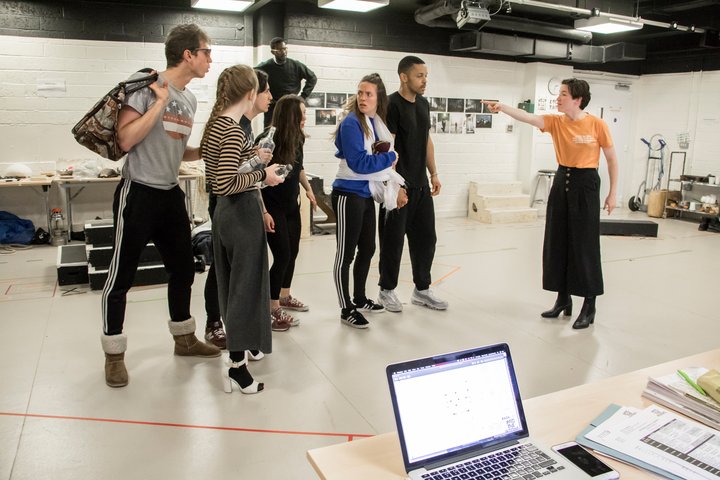
Prop-making project work
Students on the BA (Hons) in Technical Theatre and Stage Management specialise in a particular area of theatre production skills in preparation for their chosen career.
Current BA student Leo Rameckers created this wonderful copy of the famous bronze Florentine boar as one of his projects in prop-making.


Focus on: Acting technique at RADA
Students on RADA’s BA (Hons) in Acting participate in a range of classes that build on their potential and prepare them for a wide-ranging career – from voice and singing, to movement and combat, as well as dramaturgy, acting for camera, microphone technique and many more.
John Beschizza, Lead Tutor in Acting, explains what to expect in an acting technique class.

"Newly written works help us to understand the society we are living in"
Director Richard Wilson OBE writes on his commitment to new writing and the development of GIG, our new commission from celebrated playwright Atiha Sen Gupta.

The Philosophy Shop: in the making
The Philosophy Shop performance installation took place at RADA's Gielgud Theatre 13 - 23 March 2019. The piece was curated by the King’s College Cultural Institute and Informatics Department and the Video and Digital Design Department of RADA’s Technical Theatre and Stage Management training. Read all about it.

Woman and Scarecrow: "I have lived passionately unbeknownst to myself"
Director Caroline Byrne on good endings and the inner voice in Marina Carr's Woman and Scarecrow.
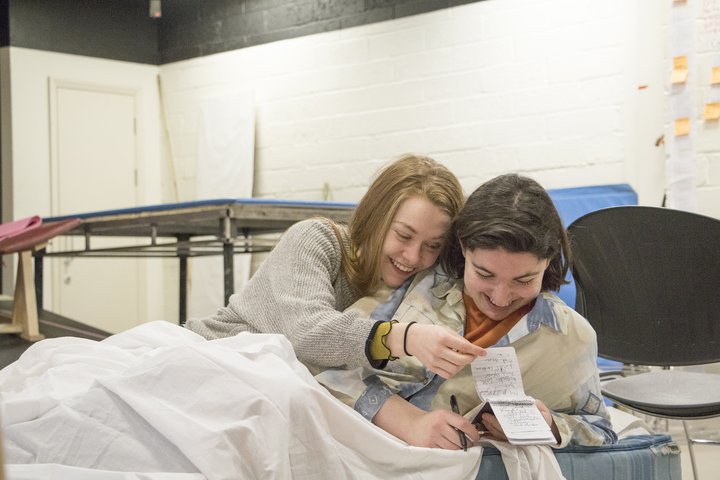
Focus On: Stage Management at RADA
As you watch one of our RADA productions, you may be struck by the creative use of lighting, sound, set and costumes, all of which demonstrate the skills of our theatre production students.
Less immediately visible to an audience, but crucial to the running of a show, is the role of stage management. Find out more about our training and the roles students take on productions in this blog.

Sarah Kane's Blasted: "#MeToo, Syria, Brexit, Trump, Bolsonaro are all part of the chaos"
Director Jenny Sealey on the continuing resonance of Sarah Kane's first full-length play, and the challenges and rewards of creating a bilingual production.

"Alike in dignity": opposition and difference in Romeo & Juliet
Director Edward Kemp on opposition and desire in Shakespeare's most famous tragedy of star-crossed lovers.

Son et Lumière
For BA (Hons) Technical Theatre and Stage Management students who choose lighting as their specialism, the annual Son et Lumière project is a fantastic opportunity to practise their lighting skills in a live events environment.
Read the blog to find out more and see a taster of students' recent work.
The Words Will Come: a new anthology from the RADA Elders Company
The RADA Elders Company has performed five newly-commissioned works since its launch in 2012.
Now these plays have been published by Oberon in a new anthology, which director of the company Vivian Munn hopes will inspire other elders theatre companies.
Read our blog to find out more.

Focus On: Costume at RADA
If you’ve ever been on one of RADA’s public tours, taking you behind the scenes of our theatres, studios and workshops, you might have had a glimpse of our extensive costume store, giving an insight into the huge variety of work carried out by the wardrobe department.
Read our blog to find out more about how we train students in costume-making and wardrobe supervision.

"Is it better to be deluded by belief, even if it may be a fiction?": Philistines by Maxim Gorky
Maxim Gorky's Philistines was written at a time of ideological and political turmoil in Russia.
In this blog, Director Donnacadh O'Briain examines the personal conflict at the heart of play, which reflects this national turbulence.
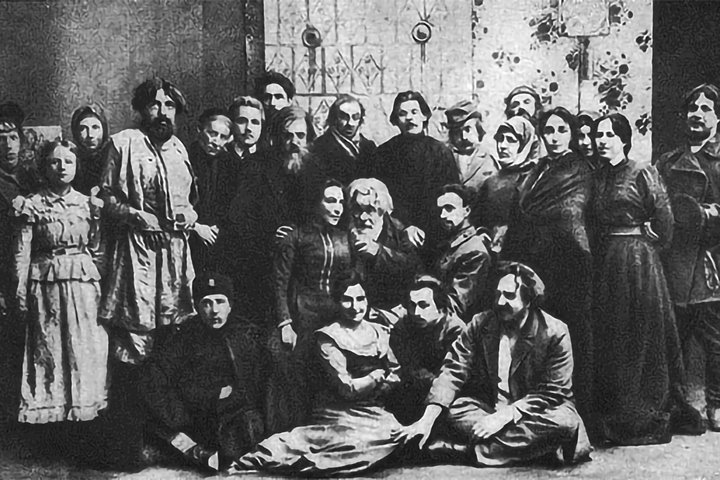
"We are a collective. We are an ensemble." Linda and the power of the voice.
Director Abigail Graham and the company of Linda, playing in the GBS Theatre this autumn, comment on the empowerment and inclusivity that comes with giving everyone a voice.

"Cut off from their pasts, ready to clothe themselves in the costumes of a new beginning"
Inspired by a photograph of her grandmother decades earlier, Lynn Nottage's Intimate Apparel follows a group of people affected by the social changes brought about my mass migration, women entering the workforce and the faster pace of city life.
In this blog, director and RADA graduate Chipo Chung reflects on how their story might reflect our own urban living.

"A story about a very human betrayal": interpreting the trial of Judas Iscariot
"We have become obsessed with the canon of biblical books throughout this rehearsal process; how it was put together and by whom... However, at the heart of this script, are the simple themes of free will and responsibility."
Read our blog from director Matthew Xia on the influences behind Stephen Adly Guirgis's The Last Days of Judas Iscariot, from the Gnostic Gospels to Making a Murderer.

"The last days in the life of a legendary womaniser": Don Juan's final journey back from the war
"It is clearly from more than just the battlefields of World War One that Don Juan is depicted as coming home in the play."
In 2012 playwright Duncan Macmillan created a striking new version of Ödön von Horváth's Don Juan Comes Back from the War, in which the notorious lothario is transported into a post-war tale of displacement and isolation. As our version opens at RADA this week, director Sue Lefton takes a look at the poignant final journey of this staple character of European theatre.
Focus on: Design at RADA
While the majority of RADA public productions are designed by professional freelance designers, this term’s production of Cathy has been created by two student design co-ordinators, Anna Cierpial and Hannah Driver.
Our Lead Design Tutor Alison Cartledge explains more about how we teach design skills, and the work that goes into creating these productions.

"A rollercoaster that gathers momentum and veers off the tracks": the powerful truths in Cathy
Inspired by the unforgettable docudrama Cathy Come Home from director Ken Loach and writer Jeremy Sandford, this contemporary, honest and heartbreaking play by Ali Taylor tells us of a working London woman who finds herself at the mercy of a burgeoning and often predatory private rental market, and an over-stretched and impractical social welfare system.
Read the full blog from director (and RADA graduate) Rosie Jones, reflecting on the powerful immediacy and resonance of Ali Taylor's Cathy.

From Verona to Gdansk: our Shakespeare for Young Audiences performers in Poland
This summer, second year students from RADA's BA (Hons) in Acting course travelled to Poland to take part in the Gdansk Shakespeare Festival, joining workshops and performing their Shakespeare for Young Audiences production of The Two Gentlemen of Verona, directed by Carl Heap.
Read the full blog from cast member Rachel Feeney – who played the roles of Lucetta, Thurio and Crab in the production – as she reflects on her experiences of the festival.

Costume and Technical Graduate exhibition 2018
"The exhibition is amazing, a space cavorting with costumes, temples, paintings, and a crocodile."
The Costume and Technical Graduate exhibition took place in our Studio Theatre from 4 - 6 July 2018, showcasing the outstanding work created by students completing a Postgraduate Diploma in Theatre Costume and specialists on the BA (Hons) Technical Theatre and Stage Management (Costume, Lighting, Property Making, Scenic Art, Sound and Video).
Reny Morsch, who has just completed our two year Postgraduate Diploma in Theatre Costume, gives us her account of the experience of preparing for the exhibition.
Read the exhibition blog here.

Aron Julius: Laurence Olivier Bursary Award winner
"RADA has changed everything for me. The training has given me more flexibility and specificity as an actor. It has stretched my capability, broadened my knowledge of plays and challenged me in the most fruitful and creative ways".
Read the full blog from BA (Hons) in Acting student Aron Julius, recent winner of the Laurence Olivier Bursary Award, who reflects on his RADA training so far.

Prasanna Puwanarajah on Journey's End and the shadow of war
"It’s never quiet, like this."
Being in a war is one of my greatest fears. I can’t imagine or really even begin to imagine the scale of the assault on lives lived in its horrendous shadow. We look into that shadow from a managed distance consisting of objective media desensitisation and a certain subjective knowledge that vivid closeness might be too hot to bear. Journey’s End is a play that gets as close to that shadow as any.
Read the full blog for more about Prasanna's take on Journey's End, the long shadow of war and what the play might say to us in 2018.

"Today's audience needs to be challenged": Simona Gonella directs The House of Bernarda Alba
Ahead of RADA's upcoming production of The House of Bernarda Alba, director Simona Gonella sat down with Director of RADA Edward Kemp to share her insights into Lorca's classic Spanish tragedy.
Listen to our podcast to hear more about the sexual politics of the play, how Simona is working with both Acting and Technical students, Baśka Wesołowska's design, and the new translation of the play.

Theatre Costume student featured in the Financial Times
Reny Morsch, who is currently training on RADA's Postgraduate Diploma in Theatre Costume, has been featured in the Financial Times in an ongoing series, Meet the Career Changers.
Reny moved into costume-making and began her studies at RADA following a 30-year career in finance, working as a trader in Frankfurt and then London.
The series of interviews in the Financial Times tracks five different people who are making a mid-life career switch.


Technical theatre: lighting students visit ROBE in the Czech Republic
In the run-up to Christmas, a group of students and staff from RADA's Technical Theatre and Stage Management department visited Robe lighting in the Czech Republic, giving them a chance to tour the factory and see a demonstration of some of their latest products.
Read the full blog from Matt Leventhall, Head of Production Lighting.

Short Courses: Stories from the summer
Last summer our students enriched the academy with their presence on our short courses: they ranged from age 16 to 73, and came from over 30 nations.
Delve into the world of RADA by reading some of the stories from our class of 2017, giving you an idea of just some of the experiences gained through our Spring/Summer Short Courses.
We have an insightful interview with TV Presenter Laura Whitmore, as well as feedback from student Finn Holmes and Patricia Magno Arizu - an internationally renowned diplomatic interpreter.

"Nowhere else offered the hands-on training that RADA does": Postgraduate Diploma in Theatre Costume
RADA's Postgraduate Diploma in Theatre Costume is a specialised course in our theatre production department, offering training in all areas of costume-making and wardrobe supervision, leaving students well-equipped for a career in costume.
We spoke to recent graduate Florence Dempster and Head of Wardrobe Diane Favell about what the course offers.

Interview with a graduate: Tanmay Dhanania
With the second series of Indian Summers recently broadcast on Channel 4, and his film Brahman Naman set to be imminently launched on Netflix worldwide, we caught up with Tanmay Dhanania about making the film and particularly his recent experience of going to the Sundance Film Festival.
"I met some wonderful people at Sundance who had done some amazing work there, and just like in RADA, you form connections which organically last."
Read the full interview.

Interview with a graduate: Maya Kazmarski
As Nick Payne’s Elegy finishes its run at the Donmar Warehouse this month, we caught up with alumna of the Technical Specialist Scenic Art course Maya Kazmarski who worked as part of the scenic art team on the show.
"Elegy was really interesting as we used real raw materials. It was a challenge from my point of view as I wasn’t ‘faking’ anything."
Read the full interview.
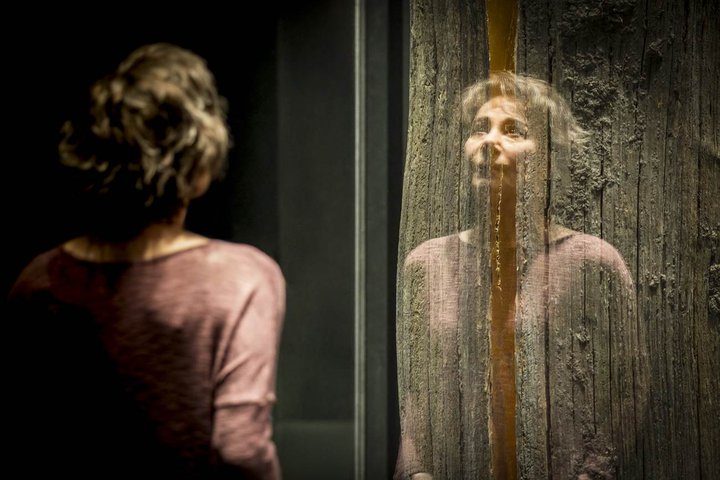
West End success for technical alumna Vicky Eames
"I felt very supported when I was at RADA... I know it will always be a home from home".
Vicky Eames completed her Graduate Diploma in Technical Theatre Arts at RADA in 2005. She has subsequently put her training into practice working as DSM (Deputy Stage Manager) freelancing in a range of venues across London and Europe. We grabbed Vicky for a quick catch-up after she finished working on The Maids at Trafalgar Studios.
Read the full interview.

Sabia Smith on After Miss Julie
Ah, that green dress - forget Keira Knightly in Atonement - RADA student of the Technical Theatre and Stage Management Foundation Degree (TTSM), Sabia Smith, has made one just as good.
Sabia, who is currently in the second year of the TTSM course, spoke to us about constructing a dress for the RADA production After Miss Julie which played in the GBS Theatre this autumn. We asked Sabia about her training, working with the designer of the show, and getting the look just right.
Read the full interview.
